 0
0


- This event has passed.
Alsace Wines – SOLD OUT – Join the wait list by emailing the treasurer
This event is SOLD OUT. We are taking a wait list. To join the wait list E-mail the treasurer.
Anne Krebiehl, MW makes the case for Alsace as an under-the-radar region that comprehensively caters to the demand for fresher, lighter styles of wine in a February posting on Club Oenologique. Allow her words which follow to motivate your securing seats for our unique Alsace event on Friday, March 13th.
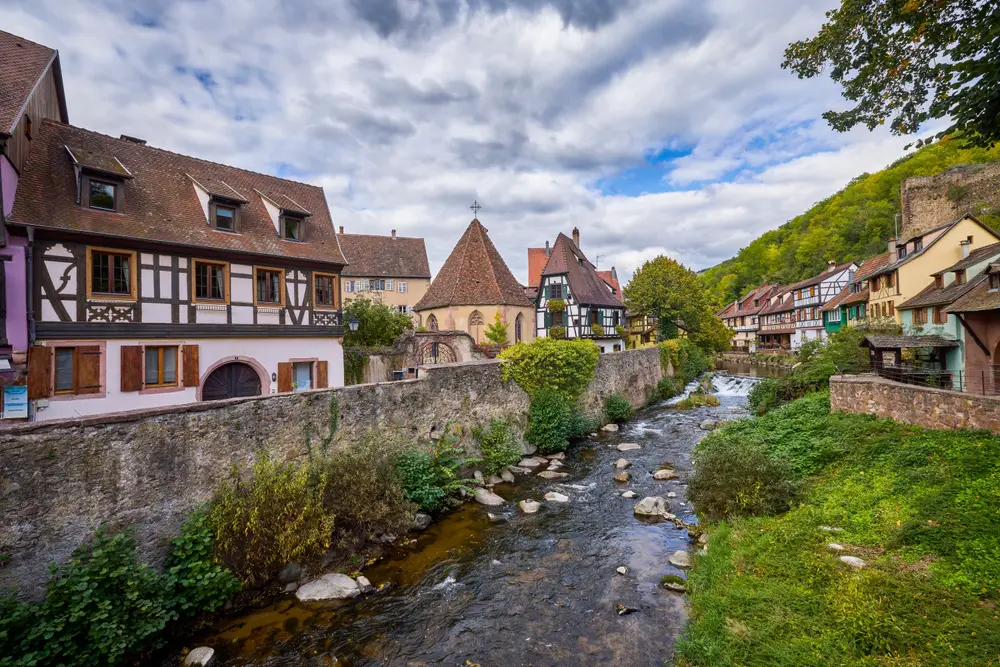
“Whether it’s racy dry whites, fragrant reds, refreshing fizz or unique aromatic varieties, Alsace has it all. Yet this region, tucked into the north-east corner of France, is often overlooked. Why? Because its varied wine styles and grape varieties refuse to be typecast easily; offering so much to the wine lover seemingly counts against it. Given the nature of contemporary tastes in wine, however, Alsace is a region ripe for reassessment.
The varied wine styles and grape varieties of Alsace refuse to be typecast easily Crémant d’Alsace is the region’s most dynamic category. These traditional method sparkling wines went from representing just under 25% of the region’s total wine production in 2005 to 40% by 2025. Their success is not surprising and is helped by a latitude almost identical to that of Champagne.
Alsace Crémants, chiefly based on Pinot Blanc and Auxerrois, come with the kind of cool, natural freshness that’s so desirable in fizz. Most are clean, bright aperitif styles but there are artisanal, longer-aged cuvées that will impress sparkling-wine aficionados.
The rosé category also merits attention: by law, the rosés have to be made from Pinot Noir, so every single bottle of pink Crémant d’Alsace is a saignée-method rosé – only without the hefty price tag.
Lovers of Pinot Noir should also tune into Alsace. This is where things have changed most dramatically in recent years. Pinot Noir has long been the red grape of Alsace and, for the longest time, it was turned into juicy, light-bodied, pale reds that made for delicious, easy drinking but would not have impressed serious Pinot lovers – this has changed fundamentally. Climate change and ambition have wrought wonders.
When a law change in 2011 finally permitted separate rulebooks for Alsace’s 51 grands crus, rather than one general rule for all, growers in three sites applied to have Pinot Noir approved as a permitted grape in the grand crus of Kirchberg in Barr, Hengst in Wintzenheim and Vorbourg in Rouffach. The first two were finally approved for the 2022 vintage and Vorbourg, at long last, for the 2024 vintage. But even outside these sites, Pinot Noir makes exquisitely elegant wines, especially in the sites of Jurassic and Triassic limestone that crop up in the varied geological mosaic of Alsace. These wines can rightfully take their place in any line-up of fine Pinot Noirs.
In 2022, Alsace also changed the rulebook for Riesling so that all non-late harvest wines must be dry. This finally put an end to lingering associations of sweetness with those flute-shaped bottles. These expressive, often site-specific wines are perfect for moods and situations where finesse is prized over power, where fine, ripe acidity takes the lead in accentuating subtle flavours and complements rather than dominates. Their lightness of body and moderate alcohol levels dial into that same desire for lightness and transparency that defines much modern cooking.
For Riesling fans, Alsace offers beautiful combinations of bedrocks: why not compare Rieslings grown on granite, limestone and marl and find your favourite? And lovers of sweet Rieslings need not worry: beguiling Vendanges Tardives and Selections de Grains Nobles, i.e. late harvest and nobly sweet styles, are still made and are always clearly labelled.
Alsace finds itself right back on trend with wines that are fresh, light and nuanced with its Pinot Gris and Gewurztraminer, Alsace holds another card up its sleeve. These more aromatic varieties are still made in a spectrum of dry, off-dry and medium sweet, but the choices put them in a sweet spot for pairing with dishes that also play with gentle sweetness while staying savoury.
This happens when spice and fruit are combined, say in a Mexican pineapple salsa with chilli, in fruit- or honey-glazed hams, or in North African tagines or pastillas. Various Asian cuisines also play this game: in Thai cuisine, for instance, accents of palm sugar counter chilli-heat and citrus tanginess, while sweet-savoury hoisin sauce lends mellow depth to Cantonese favourites like char siu-style barbecues.
With these kinds of flavours, off-dry and medium-sweet wines come into their own and can pick up and resonate with these sweeter strands of the food. Often dismissed as difficult to pair, they open up possibilities where dry wines start to struggle because they are not bone-dry or decidedly sweet but somewhere in between. Once you accept this playfulness in the wines’ balance, these pairings suggest themselves. The sweetness scale, mandatory on every bottle since 2021, has ended the guessing game that once may have prevented you from opening bottles.
Away from the spotlight, it’s clear that Alsace has quietly continued in a multifaceted vein, honing almost every style, and now finds itself right back on trend with wines that are fresh, light and nuanced – and still incredible value.”
Our event host, David Killian, has similar feelings for Alsace wines and has collected some gems for us to experience. The lively acidity and fruitiness that defines Alsace wines makes them some of the best all around partners for food. David has paired these wines with three Alsace-inspired dishes prepared by Hilton Chefs. Please contact the Treasurer for any food allergy concerns.
- Chicken Liver Mousse on Garlic Crostini with Pickled Cipollini
- Choucroute – Sauerkraut and Potatoes with Pork and Grilled Bratwurst
- Caramel Apple Galette with Brown Butter Streusel and Smoked Pecans
This is a wine lovers’ event not to be missed! We will be at the Hilton Harrisburg Friday March 13th at 7 p.m.
Reservation deadline is Tuesday, March 10th. Please contact the Treasurer for any food allergy concerns.
To make reservations, go to the Shoppe Page of this website.
Members—$140
Patrons—$135
Nonmembers—$160